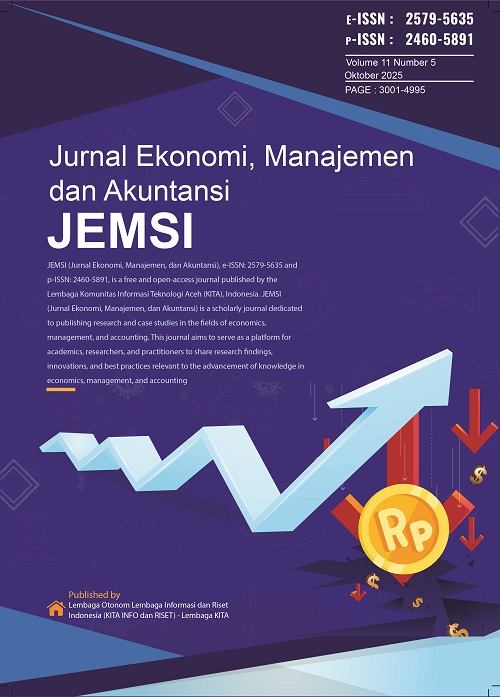
Strategi Transformasi Digital Ritel Ttradisional Dalam Adaptasi Terhadap Ekonomi Digital
DOI:
https://doi.org/10.35870/jemsi.v11i5.4566Keywords:
Digital Transformation, Traditional Retail, Digital Economy, Technology, Consumer Behavior, E-CommerceAbstract
This study analyzes digital transformation strategies that have significantly changed consumer consumption patterns, as well as the approaches implemented by traditional retail businesses to adapt to technological developments and changes in consumer behavior in the digital era. While the retail sector previously relied on physical sales methods and face-to-face interactions, traditional retailers now need to utilize digital platforms such as e-commerce, social media, and mobile applications. The main objectives of implementing these digital strategies are to improve operational efficiency, expand market reach, and provide a more personalized and relevant customer experience. By implementing these strategies, traditional retailers are not only able to survive in an increasingly digitalized market but also can capitalize on new opportunities for growth and innovation. The results of this study identify various approaches and practices that can be adopted to address market changes and consumer behavior dynamics.
Downloads
References
Agrawal, P., & Mittal, D. (2023). Digital transformation in traditional retail: A structured literature review and research agenda. International Journal of Retail & Distribution Management, 51(4), 473-497. https://doi.org/10.1108/IJRDM-06-2022-0176.
Anitawati, M., & Setiawan, R. (2022). Dampak adopsi teknologi digital pada UMKM ritel pasca-pandemi COVID-19 di Indonesia. Jurnal Ekonomi dan Bisnis, 25(2), 213-229. https://doi.org/10.24914/jeb.v25i2.4897.
Aryadi, A., Istia, P. T., Kusuma, A., Buku, A., Gunadi, H., Lorens, D., ... & Iskandar, A. A. (2024). Ekonomi Digital Dan Transformasi Bisnis Di Indonesia. TOHAR MEDIA.
Bank Indonesia. (2024). Laporan Ekonomi Digital Indonesia 2023. Bank Indonesia.
Bappenas. (2022). Peta Jalan Transformasi Digital UMKM 2022-2024. Kementerian Perencanaan Pembangunan Nasional Republik Indonesia.
Basole, R. C., & Patel, S. S. (2021). Transformation challenges and strategies for traditional retailers going digital. MIS Quarterly Executive, 20(1), 87-104.
Beltrán-Esteve, M., & Zhou, Y. (2023). The effects of digital transformation on productivity in traditional retail businesses. Sustainability, 15(9), 7289. https://doi.org/10.3390/su15097289.
Bustamante, J. C., & Rubio, N. (2021). Omnichannel strategy and traditional retailers' response to changes in consumer behavior. Journal of Business Research, 134, 655-666. https://doi.org/10.1016/j.jbusres.2021.06.027.
Chauhan, V., & Mahajan, S. (2021). Integrating social media and traditional retail: Hybrid marketing strategy for sustainable business models. Journal of Retailing and Consumer Services, 63, 102723. https://doi.org/10.1016/j.jretconser.2021.102723.
Destiani, R. D., & Mufiidah, A. N. (2024). Era baru ekonomi digital: Studi komprehensif tentang teknologi dan pasar. ADI Bisnis Digital Interdisiplin Jurnal, 5(1), 47-50.
Fitra, J., & Wahyuni, R. S. (2025). Kegagalan Ritel Tradisional Dalam Transformasi Digital: Studi Pada Pelaku Ritel Tradisional Di Wilayah Banjarnegara, Purbalingga, Banyumas, Cilacap, Dan Kebumen. Jurnal Inovasi Bisnis Manajemen dan Akuntansi, 3(1), 115-124.
Handayani, R. S., Diva, G. A., Hermansyah, E. N., & Siswati, A. (2025). Transformasi Digital E-Commerce di Era Post-Pandemic: Analisis Tren dan Dampak pada Perilaku Konsumen Indonesia. Jurnal Informatika dan Kesehatan, 2(2), 108-117. https://doi.org/10.35473/ikn.v2i2.3704.
Permana, A., Puspa, R., & Hidayat, A. M. (2025). Keberlanjutan UMKM dalam Ekonomi Digital: Strategi Adaptasi Terhadap Perubahan Perilaku Konsumen. Jurnal Fakultas Ilmu Keislaman UNISA Kuningan, 6(1), 10-17.
Pertiwi, D. I., Nurbaiti, N., & Dharma, B. (2024). Strategi Pedagang Tradisional Pakaian Fashion Muslim dalam Menghadapi Transformasi Digital Bisnis. Ganaya: Jurnal Ilmu Sosial dan Humaniora, 7(3), 282-293.
Wulandari, D. S., & Tumanggor, A. H. U. (2024). Transformasi Digital pada Pasar Tradisional. Penerbit NEM.
Downloads
Published
Issue
Section
License
Copyright (c) 2025 Ria Nadia, Intan Azura, Jannati Jannati, Syarifah Maihani

This work is licensed under a Creative Commons Attribution 4.0 International License.
Authors who publish with this journal agree to the following terms:
1. Copyright Retention and Open Access License
Authors retain copyright of their work and grant the journal non-exclusive right of first publication under the Creative Commons Attribution 4.0 International License (CC BY 4.0).
This license allows unrestricted use, distribution, and reproduction in any medium, provided the original work is properly cited.
2. Rights Granted Under CC BY 4.0
Under this license, readers are free to:
- Share — copy and redistribute the material in any medium or format
- Adapt — remix, transform, and build upon the material for any purpose, including commercial use
- No additional restrictions — the licensor cannot revoke these freedoms as long as license terms are followed
3. Attribution Requirements
All uses must include:
- Proper citation of the original work
- Link to the Creative Commons license
- Indication if changes were made to the original work
- No suggestion that the licensor endorses the user or their use
4. Additional Distribution Rights
Authors may:
- Deposit the published version in institutional repositories
- Share through academic social networks
- Include in books, monographs, or other publications
- Post on personal or institutional websites
Requirement: All additional distributions must maintain the CC BY 4.0 license and proper attribution.
5. Self-Archiving and Pre-Print Sharing
Authors are encouraged to:
- Share pre-prints and post-prints online
- Deposit in subject-specific repositories (e.g., arXiv, bioRxiv)
- Engage in scholarly communication throughout the publication process
6. Open Access Commitment
This journal provides immediate open access to all content, supporting the global exchange of knowledge without financial, legal, or technical barriers.